Course introduction

Healthy crops don’t happen by accident

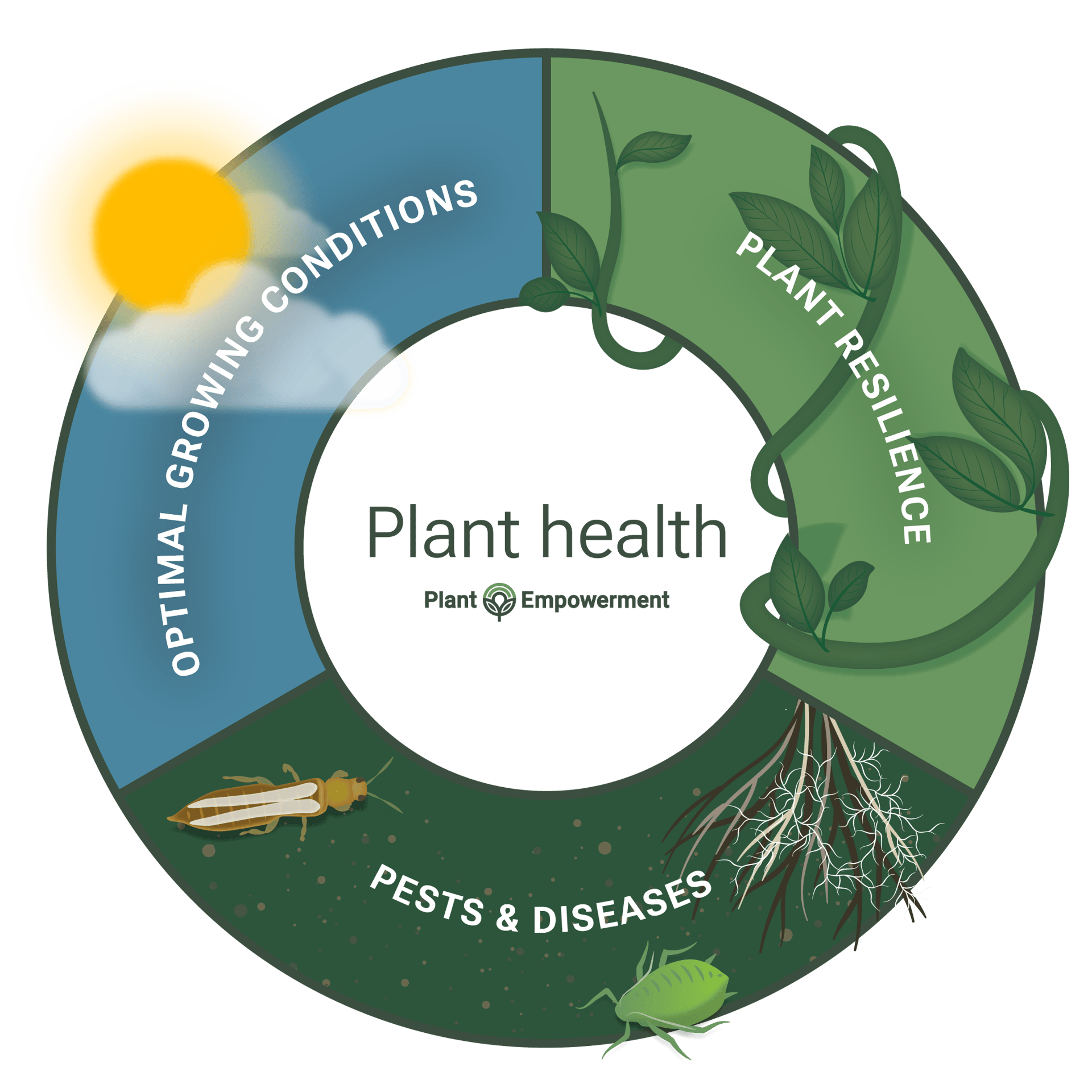
They are the result of a dynamic balance between the plant, its environment, and the pressures that surround it. The Plant Health Circle brings these elements together in one clear model.

A pest or disease only becomes a real problem when three factors align:

  • The pest or disease is present
  • The conditions allow it to thrive
  • The plant is susceptible

Modern horticulture invests heavily in the first two: exclusion, hygiene, climate control, monitoring technologies. But the third factor (the plant’s own resilience) often holds the key to long-term success.

While the Basic Principles describe the foundations of Plant Empowerment, the knowledge in this program goes a step further. It focuses specifically on plant health. An area that is not covered in depth in the book, but has become increasingly crucial in modern greenhouse production.

Want to learn more before you decide?

Understand how plant resilience, climate, root health and biology work together. Through live webinars, practical assignments and expert sessions, you’ll learn how to apply the Plant Health Circle in daily greenhouse practice.

Course curriculum

    1. Introduction

    2. About the Plant Health Circle

    3. Kick-off webinar: Introducing plant health

    1. Podcast episode 1: Understanding the Dynamics of Plant Health

    2. Podcast episode 2: Pests & Diseases

    3. Podcast episode 3: Optimal Growing Conditions

    4. Podcast episode 4: Plant Resilience

    1. E-book chapter 1: Introduction on Plant Health

    2. E-book chapter 2: Minimizing the presence of pests and diseases

    3. E-book chapter 3: Growing Conditions

    4. E-book chapter 4: Plant Resilience

    1. Course: Brix Levels & Photosynthesis - part 1 - Introduction

    2. Course: Brix Levels & Photosynthesis - part 2 - Photosynthesis

    3. Course: Brix Levels & Photosynthesis - part 3 - Assimilation

    4. Course: Brix Levels & Photosynthesis - part 4 - Making a Plan

    5. Course: Brix Levels & Photosynthesis - part 5 - Plant Feedback

    6. Course: Brix Levels & Photosynthesis - part 6 - Plant Sap Analysis

    7. Course: Brix Levels & Photosynthesis - part 7 - Closing and Summary

    8. User case: Plant Health in practice

    9. Plant Health Checklist

    10. Live case analysis: Berry Hill (Mexico)

    11. Video: Grower insights (on-site visit)

    1. Course: Healthy Rootzone - part 1 - Introduction and the basics

    2. Course: Healthy Rootzone - part 2 - Pythium and Fusarium

    3. Course: Healthy Rootzone - part 3 - Water Quality

    4. Course: Healthy Rootzone - part 4 - Substrate conditions

    5. Extra: Interview Marta Streminska - Microbial ecologist at the Wageningen University

    6. Course: Climate strategies - Introduction

    7. Course: Climate strategies - part 1 - Cultivation phases and critical moments

    8. Course: Climate strategies - part 2 - Warm and dry climate

    9. Course: Climate strategies - part 3 - Cool and humid climate

    10. Course: Climate strategies - part 4 - Transition moments

    11. Course: Climate strategies - part 5 - Tips and tricks

    12. Video: Grower insights (on-site visit)

    1. Webinar: Understanding eH & Ph

    2. Webinar: Understanding eH & Ph - extra questions

    3. Scientific paper of Olivier Husson and John Kempf

    4. Course: Optimal assimilation - part 1 - Introduction

    5. Course: Optimal assimilation - part 2 - Maximize photosynthesis

    6. Course: Optimal assimilation - part 3 - Infrared (IR) radiation

    7. Course: Optimal assimilation - part 4 - Light Use Efficiency

About this course

  • Free for all full members
  • 4 in-depth modules + a new Plant Health e-book
  • A dedicated podcast series included